David Li-Wei Chen is a Taiwanese American. His family immigrated to the United States in the mid-1970’s when he was almost two years old. He was exposed to both Taiwanese and Mandarin growing up.
Like many in the United States, he attended Saturday Mandarin “Chinese” schools, which started to become popular in the 1980’s and are now mainstream. He learned basic Chinese language grammar structure and the importance of written traditional Chinese characters, phonics, and tones that provided him language tools that he applied when visiting relatives in Taiwan. He took Japanese language in high school for his foreign language requirement and applied the tools he learned from studying Mandarin “Chinese” on Saturdays.
Testimonials
We Love Our Customers
This book delivered beyond my wildest hopes. It contains far more than the title suggests. Not only does it provide specifics of the main Taiwanese Romanization systems -- in extremely clear, detailed, and comprehensive language -- but along the way it provides general insights into one of THE great sinitic languages (or Chinese 'topolects' to use Victor Mair's coinage). Can't say enough good things about this book. As soon as it arrived, I found myself glued to it, as if reading a thriller. It's that good.
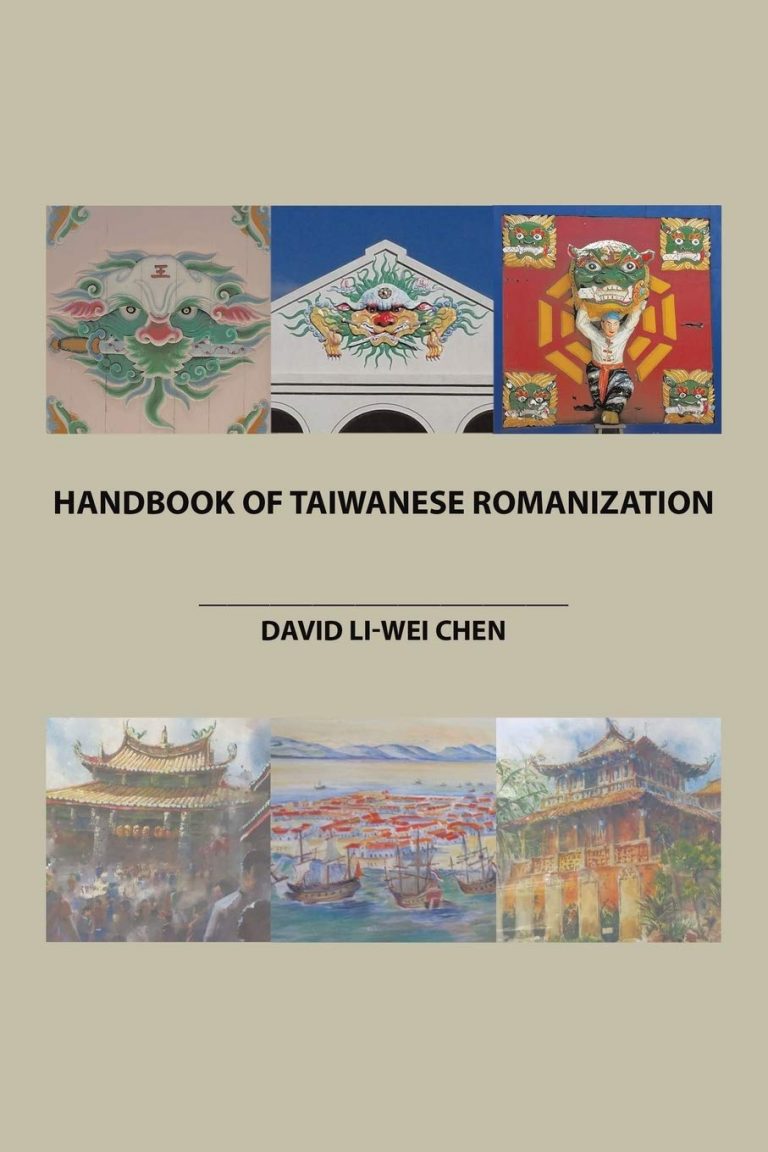
This book discusses five of several Taiwanese Romanization systems for Standard Taiwanese and Amoy Hokkien dialects of Minnanhua.
Much of the literature for learning Taiwanese and Amoy Hokkien are catered to Mandarin Chinese and Japanese speakers, a less has been made available to English speakers outside of Taiwan. This book discusses Church Romanization (POJ) and its secular derivative known as Taiwanese Romanization (Tailo) and introduces online resources as well as Taiwanese Input Method Editors (IME) that are currently available on the iPhone/iTunes and Android/Google Play mobile phone and tablet devices.
This book is for native Taiwanese speakers who live overseas and are unfamiliar with Chinese characters but want to learn how to express their mother tongue through reading and writing. It is also a tool to aid native speakers in teaching their own children.